Australia’s best business phone systems, scored properly

Everyone publishes a top ten. We scored one: every platform an Australian business can realistically buy, priced month to month rather than at the contract rate they advertise, and marked on who answers the support line, where the recordings live and whether the AI does anything. Two finished well clear of the other eight.

10 platforms, 42 criteria No signup on the finder Method published in full

The 2026 ranking

1
Uniden Voice over Cloud

Australian-built, AI answering on every plan, handsets and nbn on the same bill.

95/100
2
VOCPhone

Owns its own network and softswitch, with dialler, wallboards and AI agents built in.

92/100
3
Dialpad

The best-known AI-first platform, run out of San Ramon with a Sydney region.

80/100

Zoom Phone, 8x8, Telstra, Teams Phone, GoTo and Optus fill out the table. See every score →

42 criteria, one scorecard, every provider Nobody pays for a position Prices in AUD, verified September 2026 Written in Australia
10
Platforms an Australian business can buy today
$34.90
Cheapest seat month to month, or $28.30 if you commit to a year
$4,662
What the seat price alone can swing over five people and three years
2
Of the ten are actually built in Australia
Free tool · no signup

Four questions. Then we tell you
which one actually fits.

No email, no phone number, no “a consultant will be in touch”. It runs in your browser, uses the same scorecard as the table below, and you can see exactly which answers moved which score.

Head to head

The 2026 comparison table

Same criteria, same weightings, same week. Where a provider wouldn’t confirm something publicly, we’ve said so rather than guessed.

Ten business phone systems available in Australia, compared on price, where they’re built, support, data location, AI capability, hardware and our overall score out of ten.
Provider Month to month On a contract Built in Support Data held AI agents Handsets & nbn Score
Uniden Voice over CloudWinnerAustralian-built, AI answering on every plan, handsets and nbn on the same bill.
$34.90per user / month, no commitment
$28.3019% less, locked in Australia Australia Australia 95/100
VOCPhoneRunner-upOwns its own network and softswitch, with dialler, wallboards and AI agents built in.
$34.90per user / month, no commitment
$28.3019% less, locked in Australia Australia Australia 92/100
DialpadThe best-known AI-first platform, run out of San Ramon with a Sydney region.
$45.00per user / month, Connect Standard
Cheaper on a
12-month termrate not published
United States Partner Australia 80/100
AircallSuperb integration library, French-owned, and the priciest seat in this table.
$60.80per user / month, minimum three licences
$45.6025% less, locked in France Partner Unconfirmed Partial 78/100
Zoom PhoneCheap, competent and bolted onto the video product your team already opens.
$36.48 *per user / month, regional unlimited
Cheaper on a
12-month termrate not published
United States Partner Australia Partial 76/100
8x8Deep contact-centre capability from a US vendor that won’t tell you the price.
Not offered
$57.00 *36-month term only
United States Partner Australia Partial Partial 75/100
Telstra Business Cloud CallingAustralia’s biggest network reselling somebody else’s calling platform.
Not offered
$60.0024-36 month term only
AU, resold Australia Australia Partial Partial 74/100
Microsoft Teams PhoneThree separate licences and a carrier, stacked up to make an app your team already has ring.
$39.48 *per user / month, Teams Phone with domestic calling
$32.9017% less, locked in United States Partner Australia Partial Partial 72/100
GoTo ConnectA tidy US small-business platform with a good IVR builder and no Australian story.
$51.70 *per user / month, indicative AUD
$39.5024% less, locked in United States Partner Unconfirmed Partial 71/100
Optus Powered by RingCentralA capable American platform, resold locally, on a three-year term.
Not offered
$55.9936-month term only
AU, resold Australia Australia Partial Partial 70/100

All prices are month to month, in AUD per user per month, excluding GST, verified September 2026. That’s deliberate and it’s not how most of these providers quote themselves: the figure in their advertising is usually the discounted rate you get for signing up for a year, which is a different product to the one you can walk away from. The second column shows that rate where it exists. Entry seat shown: every provider here sells dearer tiers. Aircall requires a minimum of three licences, so its real floor is $182.40 a month. Telstra, Optus and 8x8 are sold on multi-year terms and don’t publish a month-to-month rate at all.

* Read these before you compare the numbers:

  • Zoom Phone Priced as an add-on to a Zoom Workplace licence, not as a standalone system.
  • 8x8 8x8 stopped publishing prices, so this is an indicative Australian quote rather than a list rate.
  • Microsoft Teams Phone The $12.60 to $15 figure quoted everywhere is Teams Phone Standard, which is the PBX layer and can’t ring a phone number on its own. Three things have to stack up before it does: a Microsoft 365 licence (Business Basic $10.50, Standard $21.00, Premium $32.90, or E5 which bundles Teams Phone), the Teams Phone Standard licence at $15.00, and then carriage. Microsoft’s own domestic calling bundle is $32.90 all in for the PBX plus 1,200 outbound minutes, Telstra Operator Connect is about $18.00 a line on top of the $15.00 licence, and Direct Routing needs a session border controller at $300 to $1,200 a month before you count SIP channels. We list the $32.90 bundle because it’s the cheapest path that actually makes a call.
  • GoTo Connect Listed in US dollars, so what you pay moves with the exchange rate.
The verdict

Two Australian platforms finished
clear of eight much larger ones

That result surprised us less the longer we looked at it. Microsoft, Zoom and 8x8 write better software than anybody in Australia. They also don’t own the phone line, the handset, the support queue or the bill, and in a phone system that turns out to matter more than a slicker settings page.

Winner · Best overall 2026

Uniden Voice over Cloud

The most complete package an Australian business can buy right now.

95/100

Scored across 42 criteria in six groups

What it does better than the rest

  • Designed, built and supported in Australia, with calls and recordings staying onshore
  • AI voice agents trained on your own business data, in real Australian voices
  • 40+ call-flow features on every plan instead of three tiers of paywall
  • Handsets, nbn and voice on one bill and one support number
  • Free setup and free number porting
  • Keeps taking calls through an internet outage by routing direct to mobiles

Best for: Any Australian business from a sole trader to a 1,000-seat government department that wants one supplier for phones, internet and support.

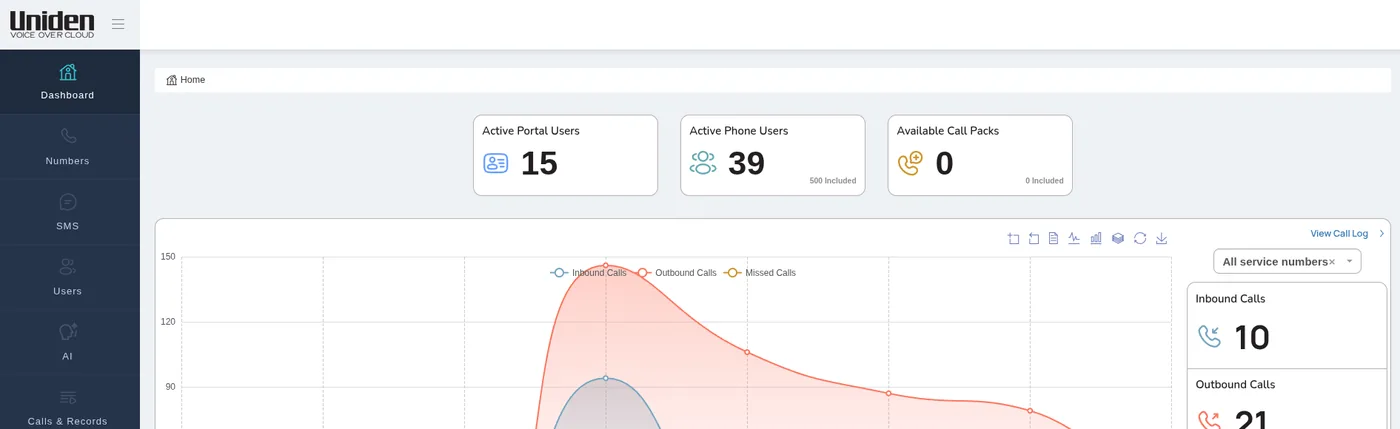
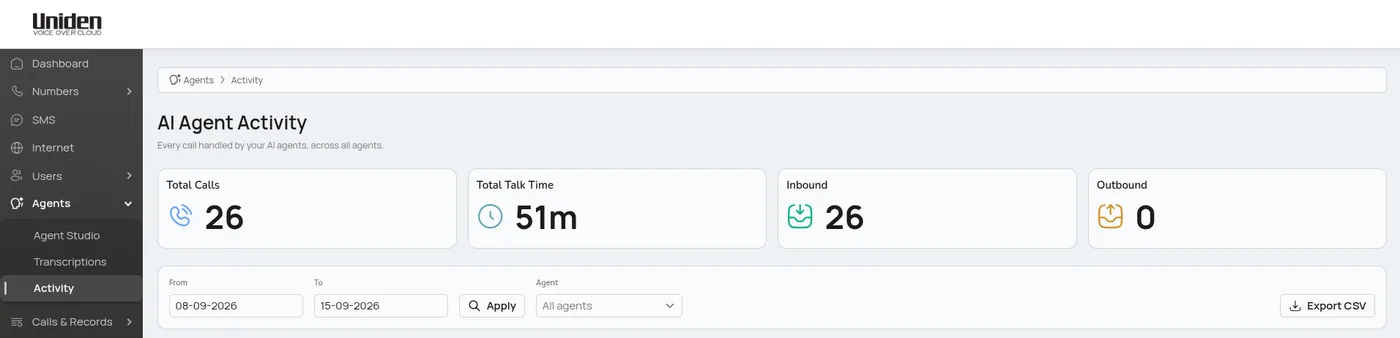
The Uniden Voice over Cloud portal showing AI agent activity: total calls, talk time and inbound volume handled by AI agents The Uniden Voice over Cloud dashboard showing active users, call packs and a call volume chart

How it scored

Features98
Value for money97
Local support98
AI capability96
Ease of setup95
Reliability94
Runner-up · Best for sales teams

VOCPhone

The one to shortlist if the phone is a sales tool, not just a phone.

92/100

Scored across 42 criteria in six groups

What it does better than the rest

  • Owns and operates its own network and softswitch, so faults get fixed rather than escalated
  • AI phone agents that book the job, log it to the CRM and hand over to a human cleanly
  • Power dialler, click-to-call and live coaching aimed squarely at sales floors
  • Live wallboards, skills-based routing and seven ring strategies out of the box
  • Open API, webhooks and Zapier, so 1,000+ apps connect without a custom build
  • Price-match guarantee and a transparent build-your-own quote tool

Best for: Sales teams, trades businesses and contact centres that measure the phone in booked jobs and closed deals.

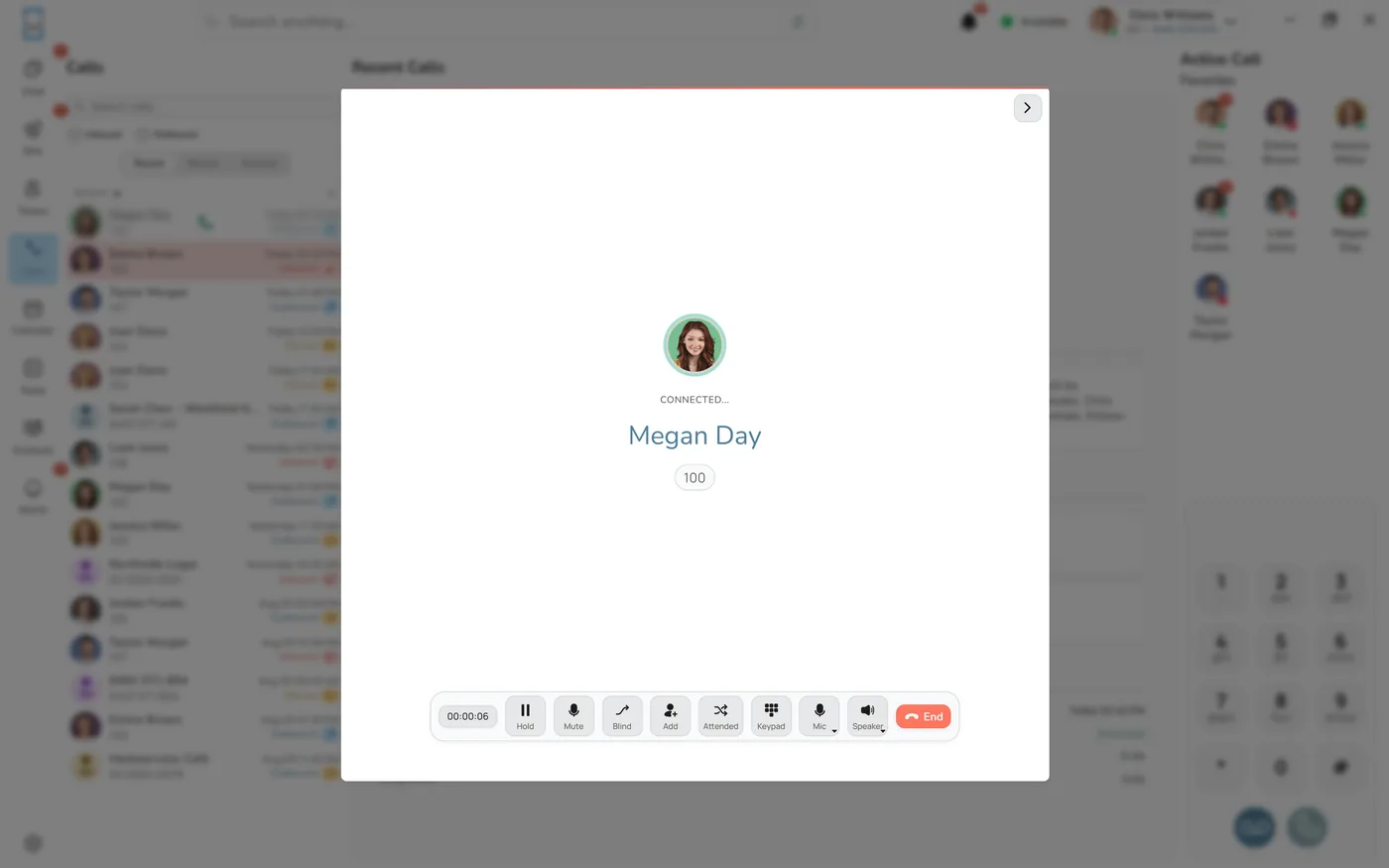
A VOCPhone desktop softphone on an active call, with the dial pad, transfer controls and team presence alongside
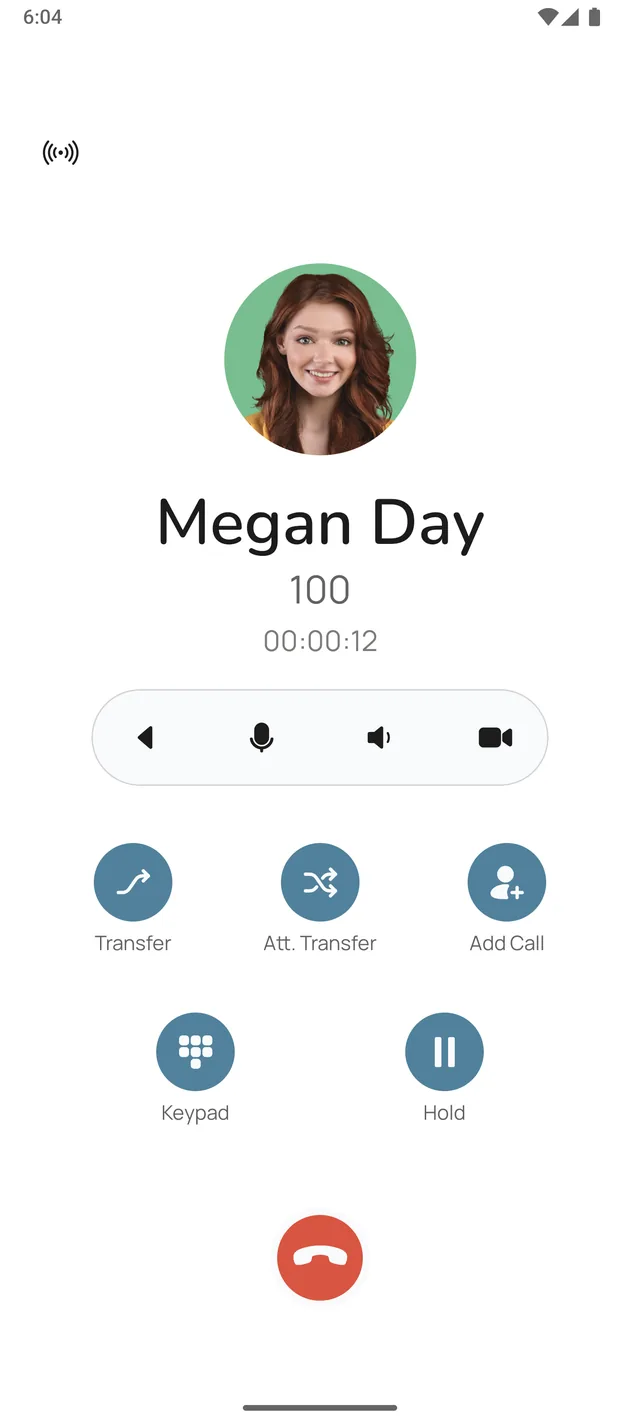
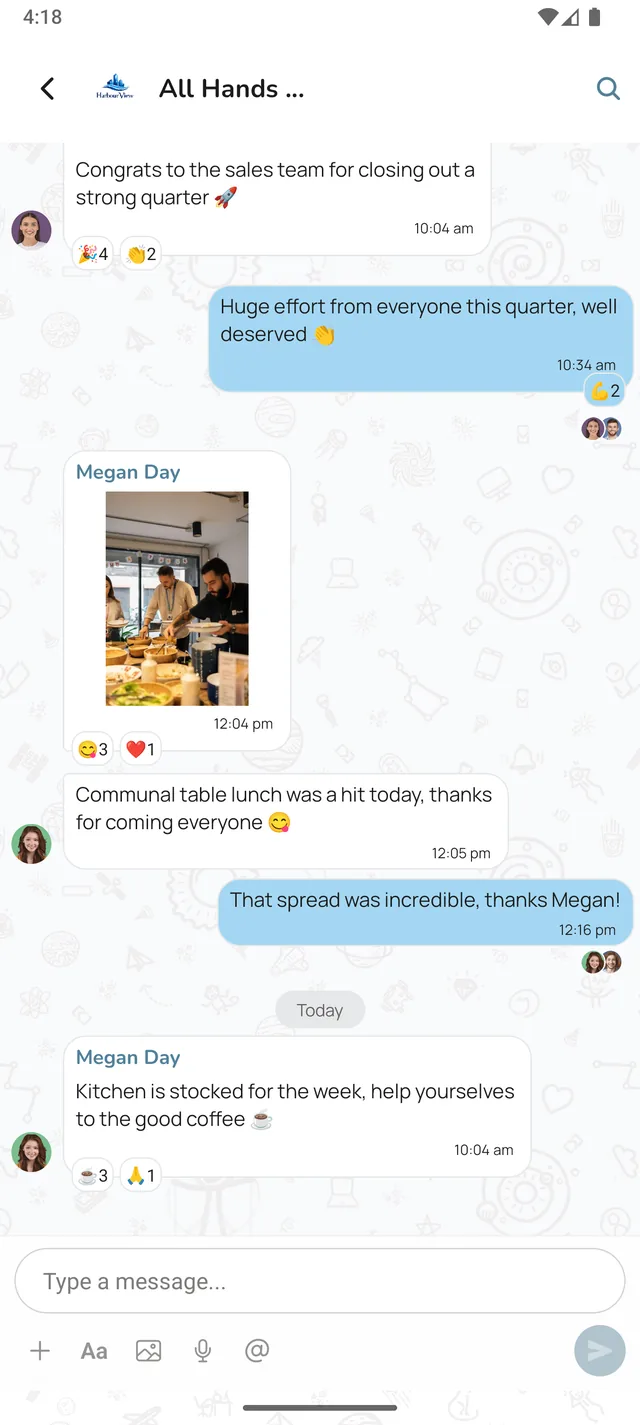
The VOCPhone mobile app on an active call The VOCPhone mobile app showing a team chat thread

How it scored

Features94
Value for money90
Local support96
AI capability92
Ease of setup89
Reliability94
Why the gap

Four things separate the top two
from everything else in the table

None of them are features you’ll find on a comparison chart, which is probably why the comparison charts keep getting this wrong.

The AI is doing real work now

In 2025 an AI agent could take a message. In 2026 the good ones answer in an Australian voice, understand what the caller means rather than which key they pressed, book the job into the calendar and write the note into the CRM. Our top two and Dialpad ship that on standard plans. The other seven sell a thinner version of it, as a tier, or not at all.

Onshore isn’t a marketing line

Ask where the recordings live and where the company is, and the field separates fast. Two of these ten are built in Australia. Microsoft, Zoom, 8x8 and Dialpad all have Australian regions and American head offices. Aircall and GoTo wouldn’t confirm Australian residency to us at all. Telstra and Optus are Australian companies reselling platforms they didn’t write.

Somebody has to own the phone line

Zoom, Dialpad, Aircall, GoTo and Teams Phone sell software and leave the carriage, the handsets and the internet to somebody else. When a call drops you get to run the argument between three vendors yourself. The Australian two sell voice, nbn and hardware on one bill with one support number.

The advertised price usually has a contract attached

Almost every price in this market is quoted at the annual-commitment rate, because it’s the smaller number, and the walk-away rate is a click further in. Aircall is $45.60 a seat on a year and $60.80 without one. Telstra, Optus and 8x8 won’t quote a month-to-month rate at all. We show both columns for everybody, and on both of them the two Australian platforms come out cheapest: $34.90 month to month, $28.30 on a twelve-month term.

Pricing

What it will actually cost

Entry seat, in AUD, excluding GST, verified September 2026, and quoted month to month throughout. Where a provider offers a cheaper rate for signing a contract, the card says what that rate is, so you can decide whether the discount is worth the term.

Best overall

Uniden Voice over Cloud

Australia · support from Australia

$34.90 /user/mo

Month to month. $28.30 if you sign for a year

Bundles from $84.90/mo for three users on a 12-month term

  • Designed, built and supported in Australia, with calls and recordings staying onshore
  • AI voice agents trained on your own business data, in real Australian voices
  • 40+ call-flow features on every plan instead of three tiers of paywall
Best for sales teams

VOCPhone

Australia · support from Australia

$34.90 /user/mo

Month to month. $28.30 if you sign for a year

Price-match guarantee on any comparable quote, either way

  • Owns and operates its own network and softswitch, so faults get fixed rather than escalated
  • AI phone agents that book the job, log it to the CRM and hand over to a human cleanly
  • Power dialler, click-to-call and live coaching aimed squarely at sales floors

Dialpad

United States · support from Partner

$45.00 /user/mo

Month to month. Cheaper on a 12-month term, rate not published

Contact-centre tiers cost substantially more

  • Real-time transcription and coaching that genuinely works
  • Sydney region for data residency
  • Clean, fast apps

Aircall

France · support from Partner

$60.80 /user/mo

Month to month. $45.60 if you sign for a year

Floor price is effectively $180/mo

  • 250+ pre-built integrations
  • Very good analytics
  • Fast to stand up for a sales team

Zoom Phone

United States · support from Partner

$36.48 /user/mo

Month to month. Cheaper on a 12-month term, rate not published

A metered tier sits below this and a global tier above it

Priced as an add-on to a Zoom Workplace licence, not as a standalone system.

  • Genuinely cheap per seat if you’re already paying for Zoom
  • One app for meetings, chat and calls, which most staff already know
  • Australian data centre region and solid call quality

8x8

United States · support from Partner

$57.00 /user/mo

36-month term only

No published price list; every number is negotiated

8x8 stopped publishing prices, so this is an indicative Australian quote rather than a list rate.

  • Contact centre and phone system on one platform rather than two
  • Strong analytics, quality management and workforce tools
  • International coverage if you’ve offices outside Australia

Telstra Business Cloud Calling

AU, resold · support from Australia

$60.00 /user/mo

24-36 month term only

Priced as part of a wider Telstra account

  • The network is the network
  • Enterprise SLAs and procurement panels
  • One vendor for mobile, data and voice

Microsoft Teams Phone

United States · support from Partner

$39.48 /user/mo

Month to month. $32.90 if you sign for a year

Plus a Microsoft 365 licence from $10.50, which is a separate line item

The $12.60 to $15 figure quoted everywhere is Teams Phone Standard, which is the PBX layer and can’t ring a phone number on its own. Three things have to stack up before it does: a Microsoft 365 licence (Business Basic $10.50, Standard $21.00, Premium $32.90, or E5 which bundles Teams Phone), the Teams Phone Standard licence at $15.00, and then carriage. Microsoft’s own domestic calling bundle is $32.90 all in for the PBX plus 1,200 outbound minutes, Telstra Operator Connect is about $18.00 a line on top of the $15.00 licence, and Direct Routing needs a session border controller at $300 to $1,200 a month before you count SIP channels. We list the $32.90 bundle because it’s the cheapest path that actually makes a call.

  • Staff already have it open, so adoption is close to free
  • Calls, chat, meetings and files genuinely in one place
  • Enterprise identity, compliance and retention come along for free

GoTo Connect

United States · support from Partner

$51.70 /user/mo

Month to month. $39.50 if you sign for a year

Priced in USD and converted; ask for an AUD quote in writing

Listed in US dollars, so what you pay moves with the exchange rate.

  • Genuinely good drag-and-drop call flow editor
  • Simple, predictable plan structure
  • Meetings and messaging bundled in

Optus Powered by RingCentral

AU, resold · support from Australia

$55.99 /user/mo

36-month term only

Device repayment plans add to the monthly figure

  • Mature RingCentral feature set underneath
  • Bundles with Optus mobile and data
  • Local billing and account management

Worked example for five people over three years at the month-to-month rate: Uniden and VOCPhone $6,282 each, or $5,094 on a twelve-month term. Zoom Phone $6,566, Teams Phone $7,106, Dialpad $8,100, GoTo Connect $9,306, Optus $10,078, 8x8 $10,260, Telstra $10,800, Aircall $10,944. Handsets, numbers and call packs sit on top of every one of them, and the Teams Phone figure still excludes the Microsoft 365 licence each of those five people needs, which adds $1,890 to $5,922 again over the same period at Microsoft’s annual-term rates, and more again if you want that month to month too.
Case studies

What it looks like when it works

Four Australian businesses that moved, what broke first, and what changed after. Sourced from the providers and published with the names attached.

Organic retail

The shop that answers the phone from anywhere

A Sydney health-food store stopped running its business line off a personal mobile, and got its owner back out of the shop.

Coco's Wealth of Health
Maroubra, NSW
Uniden Voice

Network distribution

Five phone systems that couldn’t call each other

A Hexatronic Group company spent years asking callers to hang up and dial another state. One platform ended that overnight.

Optical Solutions Australia
Five branches, nationally
Uniden Voice

Auto repair

Back on the air in thirty minutes

A workshop lost its number when its previous provider disconnected the service. It was taking calls again before lunch.

Benzina Garage
Sydney, NSW
Uniden Voice

All case studies →

What to ask

Eight questions that decide it

Take these to every provider you shortlist. The answers separate the platforms far more reliably than the feature list on the brochure.

AI that finishes the job

Answering is the easy part. Ask whether the agent books into your calendar, writes the note into your CRM and hands to a human without making the caller repeat themselves.

Australian data, Australian support

Where are recordings stored, who can access them, and what time zone is the person who answers when something breaks at 4pm on a Friday?

One number on every device

Desk phone, mobile and laptop should share extensions, transfers and call flows, and you should be able to move a live call between them without hanging up.

It has to reach your CRM

Click to dial, screen pop, automatic call logging. Native connectors for Salesforce, HubSpot, Zoho and Xero save hours a week that nobody budgets for.

A real outage plan

Not four nines on a slide. What physically happens to an inbound call at the moment the fibre outside gets cut, and how long before it happens.

Numbers you can act on

Live queue wallboards, abandonment rates, answer times by team. If you can’t see where calls are being lost you can’t stop losing them.

Call flow you can change yourself

After hours, public holidays, on-call rotations. If every change is a support ticket, you’ll stop making changes and the system will slowly stop fitting.

Pricing with no second invoice

Ask what invoice two looks like. Setup, porting, number blocks, call packs and recording storage are where a cheap seat quietly stops being cheap.

News & analysis

What changed this quarter

Pricing checks, industry shifts and the things vendors would rather you didn’t ask about. Written for people buying a phone system, not for people selling one.

All news →

Method

How we score, in full

If a comparison site won’t show you its working, the ranking is an advertisement. Here’s ours.

The 42 criteria, in six groups

Features 25% Call flow, IVR, queues, recording, video, SMS, presence
Value for money 20% Entry seat, what is included, setup, porting, invoice two
Australian footprint 20% Where it’s built, hosted and supported, and who owns it
AI capability 15% Voice quality, intent handling, booking, CRM write-back
Ease of setup 10% Time to first call, self-service changes, onboarding
Reliability 10% Uptime record, outage failover, support response

Weights were fixed before scoring and haven’t moved since. A provider that won’t confirm something publicly scores as unconfirmed, not as a zero and not as a pass.

What we won’t do

  • Sell a position in the table. There’s no paid placement on this site and there never has been.
  • Score a feature from a press release. If it’s not in the product, in the documentation or in a demo, it’s not scored.
  • Quote a price in US dollars and call it a comparison. Everything here’s AUD, ex GST, at the seat count a real business would buy.

Our advice, plainly

We built the scorecard and set the weights before any provider saw them, and we publish enough of the method that you can disagree with it.

Our advice is the same as it would be on any review site: shortlist two or three, get written quotes, and ask all of them the eight questions above.

Questions

The ones buyers actually ask

What is the best business phone system in Australia in 2026?

On our 42-point scorecard Uniden Voice over Cloud finished first with 95 out of 100 and VOCPhone second with 92, ahead of Dialpad, Aircall, Zoom Phone, 8x8, Telstra, Microsoft Teams Phone, GoTo Connect and Optus. Both are Australian built, hold call data onshore, include AI voice agents and sell handsets and nbn on the same bill. The global platforms score well on software and badly on everything that involves an Australian phone line.

How much should a business phone system cost per user in Australia?

Month to month, with Australian calls included, expect $35 to $45 per user per month before GST. Uniden Voice over Cloud and VOCPhone are the cheapest on our table at $34.90, or $28.30 each on a twelve-month term. Zoom Phone is $36.48, Microsoft Teams Phone $39.48 once you add the calling it needs, and Dialpad $45.00. GoTo Connect, Optus, 8x8, Telstra and Aircall run from $51.70 to $60.80. Most of those numbers are higher than the ones you’ll see advertised, because the advertised figure is usually the contract rate. Add handsets at roughly $180 to $250 once, and porting if your provider charges for it.

Do I need to buy desk phones?

No. Every provider here has iOS, Android and desktop apps, and most businesses start on apps only and add handsets later. Reception desks, warehouses and anywhere with shared staff still benefit from a physical phone, and only four of the ten will actually sell you one: Uniden, VOCPhone, Telstra and Optus. The rest expect you to source hardware yourself and support it yourself.

Can I keep my existing phone number?

Yes. Number portability is a regulated right in Australia and every provider in this comparison will port a working service, though with Microsoft Teams Phone the port is handled by whichever carrier you put underneath it rather than by Microsoft. Simple single-number ports usually clear in a few business days. Complex ports across multiple carriers and number blocks take longer, almost always because of paperwork rather than technology.

What happens to my phones if the internet goes down?

That depends entirely on the provider. The better systems detect the outage and route inbound calls straight to nominated mobiles, so callers never know. Weaker ones send everything to voicemail. It’s the single question most buyers forget to ask, and the one that costs the most when it’s answered badly.

Is an AI phone agent actually worth it for a small business?

For a business that misses calls, yes, and the maths isn’t subtle. A tradesperson who misses four calls a week and converts one in three is losing roughly one job a week. An AI agent that answers, qualifies and books costs far less than that. For a business whose phone rings twice a day, it’s a nice-to-have.

Does it matter where my call recordings are stored?

If you hold health, financial or government information, yes, and your obligations under the Privacy Act 1988 don’t stop at the phone system. Recordings of customer calls are personal information. Providers that host and process in Australia make that conversation short; providers that can’t tell you where the data sits make it long.

Why are your prices higher than the ones on the provider websites?

Because the headline number on a pricing page is almost always the contract rate, and we lead with the month-to-month one. Aircall advertises $45.60 a seat, which is the price for committing to a year; walk away and it is $60.80. Uniden Voice over Cloud and VOCPhone are $28.30 on a twelve-month term and $34.90 without one. Dialpad and Zoom Phone discount for a term too but publish no Australian figure we would stand behind, so we show the month-to-month price and say a cheaper rate exists rather than invent one. Telstra, Optus and 8x8 sell only on multi-year terms and publish no month-to-month rate at all. Both columns are in the table so you can compare whichever one matches how you want to buy.

Is this site independent?

We set the scorecard, the weights and the scores before any commercial conversation, and the whole method is published on this page. You should check the numbers against the providers directly and get your own quotes.

Shortlist of two. Start with the winner.

Both finished clear of the field, both are Australian, and both will give you a written quote without a sales process attached. Fifteen minutes now beats three years on the wrong platform.

Not sure which? Answer the four questions.